skip to main content
Harris Beach Murtha Attorneys at Law
Capabilities
People
main menu
Harris Beach Murtha Attorneys at Law
  • Capabilities
  • People
  • Capabilities
  • People
About
About
Inclusion and Engagement
Social Impact
Lateral Opportunities
About
Inclusion and Engagement
Social Impact
Lateral Opportunities
Resources
Insights
News
Events
Insights
News
Events
Careers
Contact
Offices
Immigration Blog
October 22, 2026

How to Determine Nonimmigrant Admission Period

Authors and Contacts

Joshua D. Hofstetter

Facebook
(Twitter)
LinkedIn
Email
Copy Page Link

Nonimmigrant visa holders in the United States have a lot of dates to keep track of, so it can sometimes be confusing for nonimmigrants (and their employers!) to determine how long they are authorized to remain and work in the United States. Nevertheless, it is incredibly important for nonimmigrants to understand how to determine their admission period, to avoid accidentally overstaying their visa and accruing unlawful presence.

Form I-797, Notice of Action

Many nonimmigrant work visas, such as the H-1B visa, require prior approval from United States Citizenship and Immigration Services (USCIS) before an individual is eligible for a visa. When a petition is approved, USCIS issues a Form I-797, Notice of Action, confirming approval of the petition, and providing a validity period, often lasting up to three years. However, this validity period does not necessarily reflect for how long an individual may be admitted into the United States. In reality, it only indicates how long the individual may be eligible to hold that status before a new petition is required.
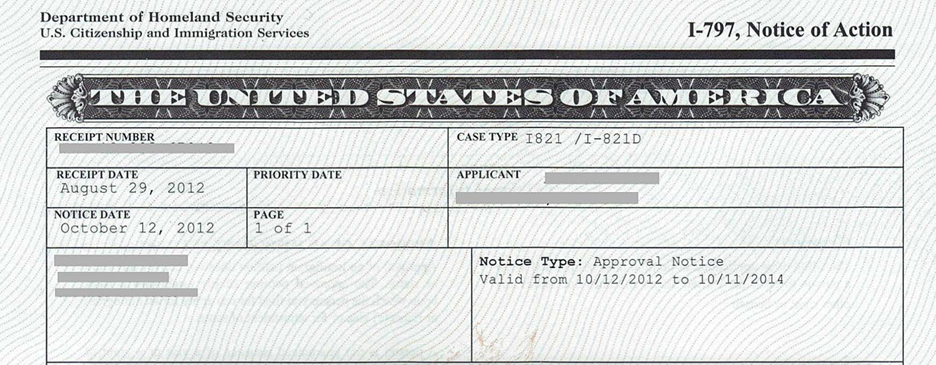
Example I-797, Notice of Action (Approval Notice)

Visa Stamp

If a visa applicant is located outside of the United States, they must obtain a valid visa stamp in their passport (issued by a U.S. embassy or consulate abroad) before entering the United States. If their visa is based on a petition approved by USCIS, the visa applicant must present evidence of that approved petition during their consular appointment.

In some instances, their visa stamp may be issued by the U.S. consulate for the full validity period of the underlying Form I-797 (e.g. three years). However, because the United States has varying reciprocity agreements with other countries, visa applicants from some countries may find their visa stamp has a shorter validity period.
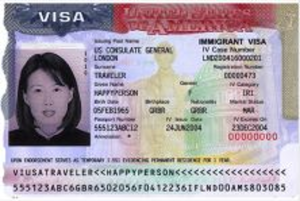
Example of a U.S. Nonimmigrant Visa Stamp

Importantly, the validity period of a visa stamp is not evidence of a nonimmigrant’s admitted period of stay in the United States. The validity period of a visa stamp just determines how long the visa holder may use that visa stamp for requesting admission to the United States in a particular status (e.g. H-1B). Essentially, the visa stamp is a “ticket” for entering the United States, and a nonimmigrant can only request admission while their “ticket” is valid. They may find, however, that once they have been admitted into the United States, their period of admission may be quite different from the validity period of their visa stamp.

Electronic I-94

All U.S. nonimmigrants should be familiar with the U.S. Customs and Border Protection (“CBP”) website for obtaining their electronic I-94 If you are a nonimmigrant visa holder and you have never visited that website – I urge you to check it now!

Every time a nonimmigrant enters the United States from abroad, the immigration officer admitting them will update their electronic I-94, and that document will determine the nonimmigrant’s category of admission (e.g. H-1B), as well as their admission period. Electronic I-94s are even issued to individuals who don’t require a visa stamp, such as Canadian citizens, or visitors entering on a Visa Waiver Program.
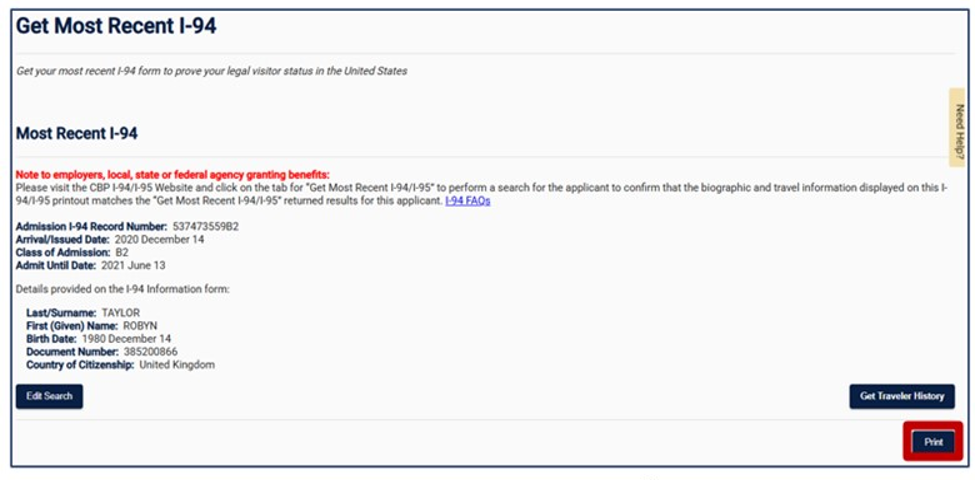
Example electronic I-94

While a visa stamp is a nonimmigrant’s “ticket” for requesting admission to the United States, it’s also important for nonimmigrants entering the United States to present a copy of their most recent approval notice (Form I-797), when applicable, as the immigration officer admitting them may need that information to make a proper determination for how long to admit the nonimmigrant into the United States. Sometimes, if a visa holder only presents their visa stamp when entering the United States, the immigration officer admitting them may only admit them for a validity period matching their visa stamp. This can have unfortunate consequences for individuals who are eligible for a longer period of stay.

By presenting a copy of their most recent approval notice, as well as evidence they are lawfully maintaining their status (e.g. recent paystubs and/or an employment verification letter), nonimmigrants can help an admitting officer have a full picture of how long they may be eligible to hold that status, resulting in a longer I-94 admission period.

In addition to reviewing the nonimmigrant’s visa stamp and approval notice, an immigration officer will also review the expiration date of the nonimmigrant’s passport. If their passport is expiring before their visa stamp and/or approval notice, the immigration officer will likely “truncate” their admission, meaning the nonimmigrant may find they have only been admitted into the United States up and until the date their passport expires. If that happens, a petition requesting an extension of their status may be required, or they may be able to resolve the issue by traveling internationally on a later date after their passport has been renewed.

If caught early enough, it’s possible to contact CBP to correct an erroneous electronic I-94, so checking your I-94 shortly after every entry to the United States is important for every nonimmigrant.

“Paper” I-94 Printed on the bottom of a new Form I-797, Notice of Action

The CBP website will only be updated when an individual enters the United States from abroad, so an electronic I-94 will not be updated when a nonimmigrant is already in the United States and their change of status or extension of status is approved by USCIS.

When a nonimmigrant is already located in the United States, and a petition/application is approved by USCIS that included request for a change or extension of their existing status, the Form I-797 (approval notice) will be issued with the nonimmigrant’s new I-94 printed near the bottom of the form, under a perforated line. That new paper I-94 will serve as evidence of the nonimmigrant’s new period of admission until they depart the United States or a new petition is filed on their behalf.
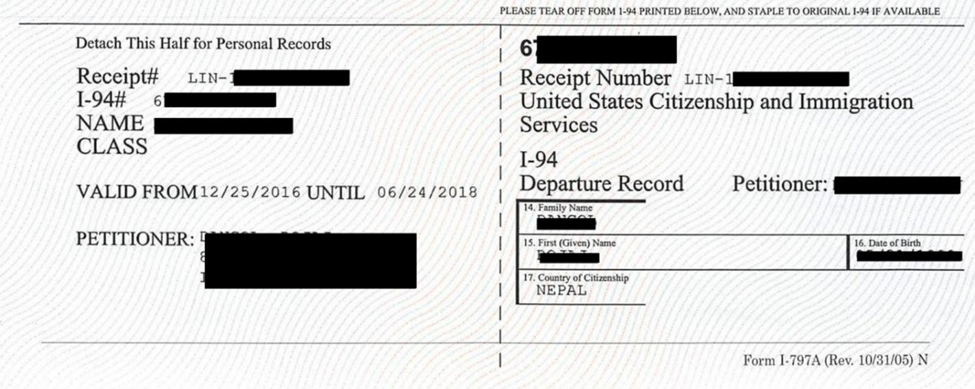
Example I-94 printed on the bottom of a I-797, Notice of Action (Approval Notice)

If a nonimmigrant departs the United States after their status has changed/been extended, they will be issued a new electronic I-94 upon their return, and their updated electronic I-94 will replace the I-94 printed on the bottom of their Form I-797. So, once again, be sure to always check your electronic I-94 after every re-entry!

If you have questions about this or other immigration issues, please contact attorney Joshua D. Hofstetter of the Harris Beach Murtha Immigration Practice Group (212) 912-3581 and jhofstetter@harrisbeachmurtha.com, or the Harris Beach Murtha attorney with whom you most frequently work.

Our immigration lawyers focus on strategies – including immigrant visas for permanent U.S. resident status and temporary visas for foreign nationals – to ensure that companies are able to hire, transfer, and retain the brightest and best non-U.S. talent. For additional immigration law insights, subscribe to our Immigration Blog.

This alert is not a substitute for advice of counsel on specific legal issues.

Harris Beach Murtha’s lawyers and consultants practice from offices throughout Connecticut in Bantam, Hartford, New Haven and Stamford; New York State in Albany, Binghamton, Buffalo, Ithaca, New York City, Niagara Falls, Rochester, Saratoga Springs, Syracuse, Long Island and White Plains; as well as in Boston, Massachusetts; Providence, Rhode Island; and Newark, New Jersey.

Authors and Contacts

Joshua Hofstetter

Joshua D. Hofstetter

Associate

Related Legal Practices

Immigration

Related Focuses

Corporate Immigration – Health Care
Corporate Immigration – Higher Education
Family-based, Humanitarian and Individual Immigration Services
I-9 Compliance and Legal Hiring Processes
Removal and Deportation Defense
Temporary and Seasonal Visas (H-2A and H-2B)
Facebook
(Twitter)
LinkedIn
Email
Copy Page Link

Contact Us

Harris Beach Murtha Attorneys at Law
  • Contact
  • Offices
  • Privacy Policy
  • Legal Disclaimer
  • Site Map
  • Contact
  • Offices
  • Privacy Policy
  • Legal Disclaimer
  • Site Map
Payment Portal
X-twitter Facebook Linkedin Instagram
Attorney Advertising. Prior results do not guarantee a similar outcome. © 2026 Harris Beach Murtha Cullina PLLC
TRUSTe
Harris Beach Murtha Attorneys at Law
Back to Top

Insights

How to Determine Nonimmigrant Admission Period

Capabilities
People
Harris Beach Murtha Attorneys at Law
Immigration Blog
October 22, 2026

How to Determine Nonimmigrant Admission Period

Insight

Nonimmigrant visa holders in the United States have a lot of dates to keep track of, so it can sometimes be confusing for nonimmigrants (and their employers!) to determine how long they are authorized to remain and work in the United States. Nevertheless, it is incredibly important for nonimmigrants to understand how to determine their admission period, to avoid accidentally overstaying their visa and accruing unlawful presence.

Form I-797, Notice of Action

Many nonimmigrant work visas, such as the H-1B visa, require prior approval from United States Citizenship and Immigration Services (USCIS) before an individual is eligible for a visa. When a petition is approved, USCIS issues a Form I-797, Notice of Action, confirming approval of the petition, and providing a validity period, often lasting up to three years. However, this validity period does not necessarily reflect for how long an individual may be admitted into the United States. In reality, it only indicates how long the individual may be eligible to hold that status before a new petition is required.

Example I-797, Notice of Action (Approval Notice)

Visa Stamp

If a visa applicant is located outside of the United States, they must obtain a valid visa stamp in their passport (issued by a U.S. embassy or consulate abroad) before entering the United States. If their visa is based on a petition approved by USCIS, the visa applicant must present evidence of that approved petition during their consular appointment.

In some instances, their visa stamp may be issued by the U.S. consulate for the full validity period of the underlying Form I-797 (e.g. three years). However, because the United States has varying reciprocity agreements with other countries, visa applicants from some countries may find their visa stamp has a shorter validity period.

Example of a U.S. Nonimmigrant Visa Stamp

Importantly, the validity period of a visa stamp is not evidence of a nonimmigrant’s admitted period of stay in the United States. The validity period of a visa stamp just determines how long the visa holder may use that visa stamp for requesting admission to the United States in a particular status (e.g. H-1B). Essentially, the visa stamp is a “ticket” for entering the United States, and a nonimmigrant can only request admission while their “ticket” is valid. They may find, however, that once they have been admitted into the United States, their period of admission may be quite different from the validity period of their visa stamp.

Electronic I-94

All U.S. nonimmigrants should be familiar with the U.S. Customs and Border Protection (“CBP”) website for obtaining their electronic I-94 If you are a nonimmigrant visa holder and you have never visited that website – I urge you to check it now!

Every time a nonimmigrant enters the United States from abroad, the immigration officer admitting them will update their electronic I-94, and that document will determine the nonimmigrant’s category of admission (e.g. H-1B), as well as their admission period. Electronic I-94s are even issued to individuals who don’t require a visa stamp, such as Canadian citizens, or visitors entering on a Visa Waiver Program.

Example electronic I-94

While a visa stamp is a nonimmigrant’s “ticket” for requesting admission to the United States, it’s also important for nonimmigrants entering the United States to present a copy of their most recent approval notice (Form I-797), when applicable, as the immigration officer admitting them may need that information to make a proper determination for how long to admit the nonimmigrant into the United States. Sometimes, if a visa holder only presents their visa stamp when entering the United States, the immigration officer admitting them may only admit them for a validity period matching their visa stamp. This can have unfortunate consequences for individuals who are eligible for a longer period of stay.

By presenting a copy of their most recent approval notice, as well as evidence they are lawfully maintaining their status (e.g. recent paystubs and/or an employment verification letter), nonimmigrants can help an admitting officer have a full picture of how long they may be eligible to hold that status, resulting in a longer I-94 admission period.

In addition to reviewing the nonimmigrant’s visa stamp and approval notice, an immigration officer will also review the expiration date of the nonimmigrant’s passport. If their passport is expiring before their visa stamp and/or approval notice, the immigration officer will likely “truncate” their admission, meaning the nonimmigrant may find they have only been admitted into the United States up and until the date their passport expires. If that happens, a petition requesting an extension of their status may be required, or they may be able to resolve the issue by traveling internationally on a later date after their passport has been renewed.

If caught early enough, it’s possible to contact CBP to correct an erroneous electronic I-94, so checking your I-94 shortly after every entry to the United States is important for every nonimmigrant.

“Paper” I-94 Printed on the bottom of a new Form I-797, Notice of Action

The CBP website will only be updated when an individual enters the United States from abroad, so an electronic I-94 will not be updated when a nonimmigrant is already in the United States and their change of status or extension of status is approved by USCIS.

When a nonimmigrant is already located in the United States, and a petition/application is approved by USCIS that included request for a change or extension of their existing status, the Form I-797 (approval notice) will be issued with the nonimmigrant’s new I-94 printed near the bottom of the form, under a perforated line. That new paper I-94 will serve as evidence of the nonimmigrant’s new period of admission until they depart the United States or a new petition is filed on their behalf.

Example I-94 printed on the bottom of a I-797, Notice of Action (Approval Notice)

If a nonimmigrant departs the United States after their status has changed/been extended, they will be issued a new electronic I-94 upon their return, and their updated electronic I-94 will replace the I-94 printed on the bottom of their Form I-797. So, once again, be sure to always check your electronic I-94 after every re-entry!

If you have questions about this or other immigration issues, please contact attorney Joshua D. Hofstetter of the Harris Beach Murtha Immigration Practice Group (212) 912-3581 and jhofstetter@harrisbeachmurtha.com, or the Harris Beach Murtha attorney with whom you most frequently work.

Our immigration lawyers focus on strategies – including immigrant visas for permanent U.S. resident status and temporary visas for foreign nationals – to ensure that companies are able to hire, transfer, and retain the brightest and best non-U.S. talent. For additional immigration law insights, subscribe to our Immigration Blog.

This alert is not a substitute for advice of counsel on specific legal issues.

Harris Beach Murtha’s lawyers and consultants practice from offices throughout Connecticut in Bantam, Hartford, New Haven and Stamford; New York State in Albany, Binghamton, Buffalo, Ithaca, New York City, Niagara Falls, Rochester, Saratoga Springs, Syracuse, Long Island and White Plains; as well as in Boston, Massachusetts; Providence, Rhode Island; and Newark, New Jersey.

Authors

Joshua D. Hofstetter

Associate
(212) 912-3581
jhofstetter@harrisbeachmurtha.com
Attorney Advertising. Prior results do not guarantee a similar outcome. © 2026 Harris Beach Murtha Cullina PLLC
Content current as of November 7, 2026 2:03 am